
Snapshot: what SkyMiles is and how you earn status for 2027
SkyMiles is Delta's program and Medallion is its status ladder: Silver, Gold, Platinum and Diamond. Status is earned only with Medallion Qualification Dollars (MQDs). There is no separate miles count and no flight or segment requirement — dollars are the whole game, which makes the system easy to understand and a little hard on cheap fares.
How MQDs are earned
- Flying. Delta-marketed flights earn 1 MQD per $1 of ticket price, excluding government taxes and fees. Main Basic (Basic Economy) tickets earn no MQDs.
- Award tickets. Delta-operated SkyMiles award tickets earn MQDs at miles redeemed ÷ 100 (Main Basic excluded). Partner-operated awards booked through a direct Delta channel in Main Cabin-equivalent or above earn at the same rate.
- Cards. Delta Platinum and Reserve cards (personal and business) give a $2,500 MQD Headstart per card type each qualification year, no spend required — up to 4 deposits / $10,000 across card types. Spending then earns 1 MQD per $20 (Platinum) or per $10 (Reserve), with no cap on Boost MQDs. Gold and Blue cards earn no MQDs.
- Partner flights. Partner flights use two different systems (below), so there is no single partner rate.
- Choice Benefits and Delta Vacations. Platinum and Diamond members can pick an MQD Accelerator toward the next year ($1,000 / $2,000), and eligible Delta Vacations bookings can earn MQDs under their own terms.
Tiers, benefits and every way to get there
One diagram: the staircase across the top is the tier and what it adds; each row is one way to climb. Read down a step to see what every path takes to reach that tier. Silver is SkyTeam Elite; Gold, Platinum and Diamond are SkyTeam Elite Plus.
Choice Benefits: the second ladder at the top
Platinum members pick one Choice Benefit; Diamond members pick three. The headline options (2026 Medallion year values):
| Choice Benefit | Platinum (1 choice) | Diamond (3 choices) |
|---|---|---|
| Upgrade certificates | 4 Regional | 4 Global, or 8 Regional, or 2 Global + 4 Regional (cert option once a year) |
| Bonus miles | 35,000 | 40,000 |
| Gift Medallion status | Silver × 4 | Gold × 4 |
| Sky Club membership | — | Individual = 2 choices; Executive = 3 choices |
| MQD Accelerator (next year) | 1,000 MQDs | 2,000 MQDs |
| Delta travel voucher | $350 | $550 |
| Also available | Delta Vacations credit ($400 / $500), Wheels Up credit ($1,500 / $2,000), Delta Amex statement credit ($250 / $500, Platinum/Reserve cards only), 6,000 Starbucks Stars, $250 sustainable aviation fuel contribution | |
Choice Benefits must be selected by January 31 of the second year after earning. Picking a gift means not picking upgrade certificates, miles, or another Choice Benefit.
Mixing flying and card spend is where it gets practical
A Reserve cardholder starts the year with 2,500 MQDs, so about $7,500 of Delta fares reaches Gold — no extra card spend required. A traveler who flies $10,000 of Delta fares and pays with the Reserve earns 10,000 flying MQDs + 1,000 card MQDs + the 2,500 headstart = 13,500, just short of Platinum; about $15,000 of Reserve spend closes the gap.
The cards that earn MQDs
Only two Delta cards earn status dollars: Reserve and Platinum. The headstart is the headline — $2,500 MQDs per card type just for holding the card — and the spend rate decides how fast the rest comes.
Gold ($150 after a $0 first year) and Blue ($0) earn no MQDs, but both give a free first checked bag, Zone 5 boarding, and TakeOff 15 on Delta-operated awards. The Reserve's companion certificate covers First, Comfort+ and Main cabin; Platinum's covers Main cabin (fare classes L, T, U, V or X). Both certificates arrive after renewal, not in year one, and the companion pays only $22–$250 in taxes and fees.
See what your own spending would earn
The Credit Card Rewards Optimizer routes your real monthly spending across cards and shows when annual spend unlocks perks. Use it to test whether a card-based route to status fits your budget before you apply for anything.
Test Delta cards in the optimizer Is Delta status worth what it costs? Run the calculatorAward redemption flexibility
Delta's awards are priced dynamically with no published award chart — the same seat can cost 5,000 miles one day and 50,000 the next. The rules around them are among the friendlier in the industry; the pricing is the hard part.
Pricing
SkyMiles typically deliver about 1.1–1.2¢ per mile on Delta metal, and 1.6–2.5¢ via partners for the same inventory. Domestic one-way awards start from 5,000 miles (flash sales lower). Partner business class to Europe runs about 95,000 SkyMiles one-way after the recent devaluation, and Delta One awards often price at 300,000–400,000 miles. Judge every award by cents per mile against the cash fare, and use the 5-week calendar. SkyMiles never expire.
Pay with Miles and TakeOff 15
Pay with Miles (a card benefit) values miles at a flat 1¢ each — a floor, not a sweet spot. TakeOff 15 gives Gold, Platinum and Reserve cardholders 15% off Delta-operated award tickets (not partner-operated flights, taxes or fees), and it stacks on flash-sale pricing.
Transfers
American Express Membership Rewards transfers to SkyMiles at 1:1, typically within 48 hours, with an excise-tax offset fee of $0.0006 per point (capped at $99). Transfers are irreversible — only transfer with a specific booking in mind. Amex occasionally offers transfer bonuses; we do not publish a typical size because it varies.
Changes, cancellations and fees
Award tickets originating in North America can be changed or canceled without a redeposit or change fee — except Basic awards, which cost 9,900 miles to cancel domestically and 19,900 internationally (if the award cost less than that, you get nothing back).
Search tools
- Search: delta.com's 5-week calendar / Price Calendar shows Delta and partner awards. For SkyTeam awards, the Air France–KLM Flying Blue site and Virgin Atlantic's Flying Club can price the same seat for fewer miles (see gems).
- Availability tools: Seats.aero and AwardFares track SkyTeam award availability across dates.
- Book for anyone. You can book awards for yourself or someone else, even if you are not flying with them.
Hidden gems and value propositions
These are the non-obvious things worth knowing, each tied to a current source. Items we could not confirm for this review were dropped.
City fit: who should favor Delta
Delta counts nine hubs: Atlanta, Boston, Detroit, Los Angeles, Minneapolis–St. Paul, New York (JFK and LaGuardia), Salt Lake City and Seattle–Tacoma — plus focus cities Austin and Raleigh/Durham. If you live near one, status and upgrades are most useful because your home-airport flights are Delta's strongest.
Where Delta is the natural default
- Atlanta, Detroit, Minneapolis–St. Paul and Salt Lake City. These are Delta hubs where none of United or American runs a hub, so Delta is the practical home program for residents who want hub-based benefits. Atlanta is the largest hub in the world and roughly 80% Delta.
- Seattle and Boston. Delta has hubs at both. At Seattle, Alaska Airlines is also a major carrier. In Boston, other airlines compete heavily, so compare fares per trip.
- New York. Delta shares JFK and LaGuardia with American, and United has Newark. Pick by the airport you use, then by your card and lounge preferences.
- Los Angeles. All three programs list LAX as a hub. Delta fits if you value Delta One and Delta's upgrade rules on its network, or if you plan to build status with an Amex card.
- Washington, D.C. DCA is not a Delta hub — DCA is American's, Dulles is United's. DC-area Delta flyers connect via Atlanta, Detroit, JFK or Boston.
Redemption optionality by city
Hub residents see more nonstop options, and Delta's friendlier award change rules make it easier to book early. SkyTeam partners (Air France, KLM, Korean Air, Virgin Atlantic and others you can book on delta.com) add international reach, with the caveats about price and availability above.
Who Delta is not for
- Basic Economy buyers. Main Basic tickets earn no miles and no MQDs, get no upgrades of any kind, no advance seat selection (seats assigned after check-in, parties may be split), no same-day confirmed or standby, and no Sky Club entry even with an eligible card or membership. Cancellation costs a $99 fee domestically (higher on some international routes) deducted from a partial eCredit.
- People who want lounge access from status. Status alone buys no Delta Sky Club access in Main Cabin or Comfort+, domestic or international. Do not buy status for lounge access.
- People who want cheap, predictable awards. Delta's awards are dynamic with no chart, and the same seat can swing from 5,000 to 50,000 miles by date and demand.
- Cheapest-fare flyers. Because status is dollars only and Main Basic tickets earn no MQDs, buying the cheapest fares makes Medallion slow to earn. And MQDs do not roll over — excess MQDs evaporate December 31.
- People without a Delta hub nearby. Status is worth less when you connect through other airlines' hubs most of the time.
- Card-only status seekers at the top. Diamond on spend alone takes about $255,000 of Reserve spend.
- People who want a family pool. We could not verify a SkyMiles household pooling option.
Sources and verification
This guide draws on Delta's own pages and news site where possible, plus reputable travel-loyalty reporting for context. Where we could not confirm a detail we left it out or said so.
Photos and marks
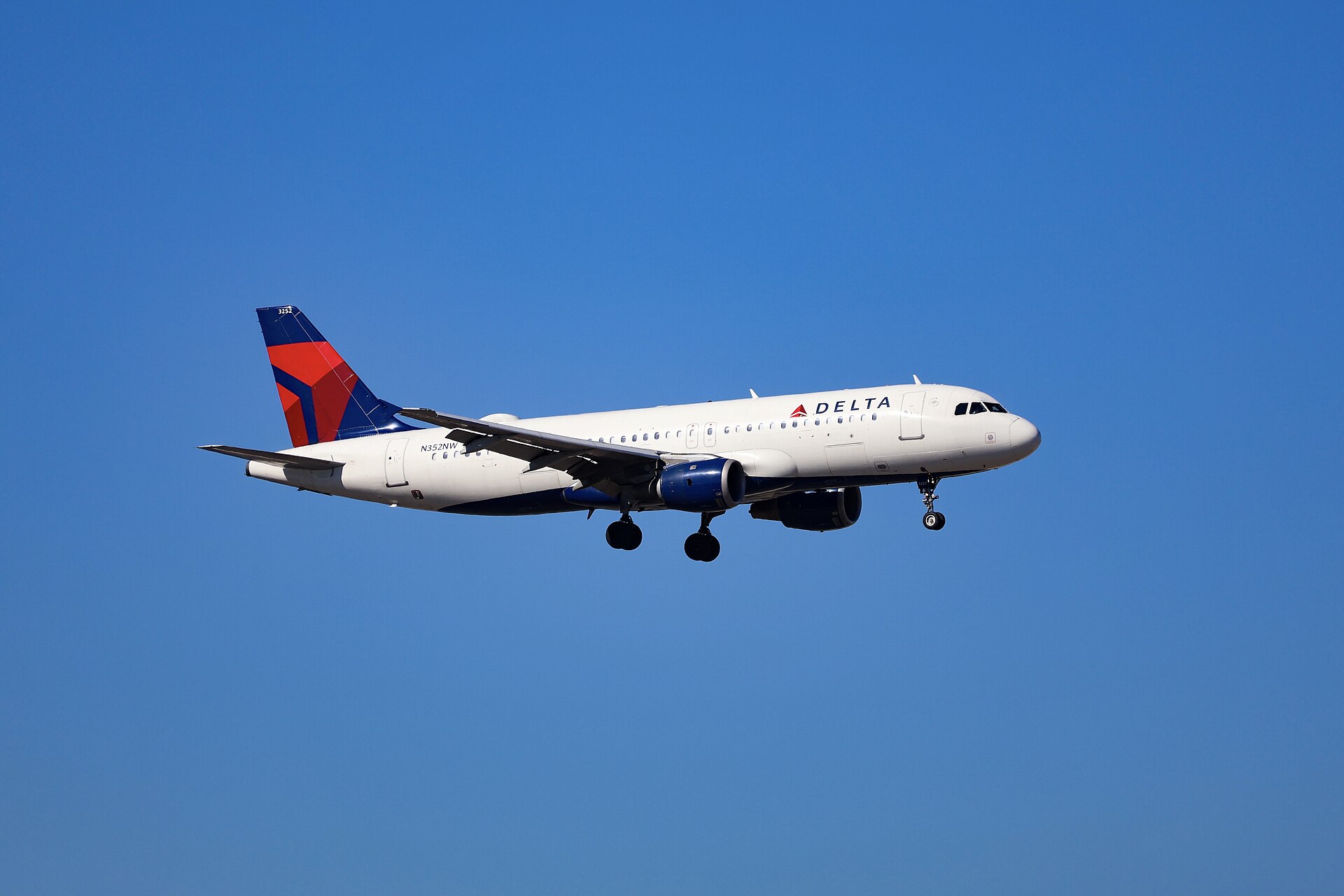
Hero photo: Delta Airbus A320 on final approach to Atlanta — Matthew Groh, CC BY-SA 4.0. SkyTeam mark: public-domain wordmark; SkyTeam is a registered trademark of SkyTeam. Star Alliance mark: public-domain text logo; oneworld mark: public-domain globe. The DELTA lockup on this page is drawn for this guide, not official Delta artwork. Delta, SkyMiles and Medallion are trademarks of Delta Air Lines.