
Snapshot: what MileagePlus is and how you earn status in 2027
MileagePlus pays you in United miles for flying and for spending on United-branded cards, and it grades you into four Premier tiers: Silver, Gold, Platinum and 1K. For 2027, status is earned on one yardstick only: Premier Qualifying Points (PQP), which track dollars. The old PQF flight-count shortcut is gone.
The one way to qualify
Every tier has a single PQP threshold for 2027. United removed the PQF flight-count shortcut, so there is no more trading segments for dollars. Two rules sit on top: you need to fly at least four paid segments on United or United Express in the year, and your qualifying window is the calendar year, January 1 through December 31, 2027.
How PQP is actually earned
- PQP from flying. United counts roughly one PQP per dollar on the base fare and carrier-imposed charges of eligible United-operated tickets; government taxes are left out. PQP goes to the traveller, not to whoever paid for the ticket.
- PQP from cards. Primary cardholders of eligible Chase United cards earn PQP on purchases, up to a per-card annual cap. That is the card route covered below.
- PQP from partner flights. Partner-operated flights earn PQP per award mile at reduced rates with per-flight caps (preferred partners: 1 PQP per 5 award miles, capped at 750 in Economy / Premium Economy and 1,500 in First / Business). Flying United metal is the straightforward way to stack PQP.
- Starter PQP for 2027. Members who held an eligible United card by December 31, 2026 and qualify for 2027 status start the year with a 5% bonus: 300 PQP for Silver, 600 for Gold, 900 for Platinum and 1,600 for 1K (based on status as of February 1, 2027). Club and Quest cardholders also get their yearly card bonus (1,500 and 1,000 PQP).
A note on the Club Card cap: United's own pages were briefly inconsistent on the 2027 figure (28,000 vs 32,000). This guide uses 32,000 PQP from United's October 13, 2026 announcement of the 2027 program.
Tiers, benefits and every way to get there
One diagram: the staircase on the left is the tier and what it adds; each column is one way to climb. Read across a step to see what every path takes to reach that tier.
Mixing paths: a realistic year
Say you put $8,000 of United fares on the Club Card and $40,000 of everyday spend on the same card. The fares earn 8,000 flight PQP + 533 card PQP; the everyday spend earns 2,667 PQP; the yearly bonus adds 1,500. Total: 12,700 PQP — Gold, without flying any more than the fares you already bought. That is how the card route actually works: it tops up the flying you were doing anyway.
The cards behind the card columns
Two caveats. First, card-only status is a stunt, not a plan — Gold on the Club Card alone takes $157,500 of annual card spend (see the ladder), and spend that you would not otherwise make is never worth the miles. Second, 1K is reachable on spend alone only with the Club Card (Quest tops out at 18,000 PQP from spend, which stops at Platinum), and United still requires the four flown segments.
See what your own spending would earn
The Credit Card Rewards Optimizer routes your real monthly spending across cards and shows when annual spend unlocks perks. Use it to test whether a card-based route to status fits your budget before you apply for anything.
Award redemption flexibility
The short version: United prices its own flights dynamically, offers good access to the Star Alliance, and removes most of the penalties that used to make awards stressful. Here is how that breaks down.
Dynamic pricing, with a Saver floor
United moved away from a published award chart several years ago. Awards on United-operated flights now come in two broad flavors: Saver awards, the lowest-priced and capacity-controlled tier, and higher-priced Everyday awards that appear when Saver space is gone. Prices move with the route and date, so there is no chart to memorize. The practical rule: search flexible dates, compare Saver against Everyday, and judge value as cents per mile against the cash fare, not against a chart.
Cardholder discounts and exclusive Saver space
Since early 2026, United gives primary United cardholders at least 10% off United-operated awards, and at least 15% off if they also hold Premier status. United also reserves extra Saver inventory, including in Polaris business class, for cardholders and Premier members; the airline says roughly a third of flights that show Saver fares have inventory exclusive to those groups. United's own examples: a 15,000-mile economy award becomes 13,500 for a cardholder, and a 200,000-mile Polaris seat becomes 170,000 for a Premier cardholder.
Star Alliance partner awards
MileagePlus miles also book Star Alliance partners, from Air Canada and Lufthansa Group to ANA, Singapore Airlines, Air New Zealand and EVA. Partner awards are where long-haul premium cabins can be most attractive per mile, but availability and pricing vary by airline and route, and some partners add their own surcharges. Always compare the miles plus the cash taxes and fees before you ticket. Lower-confidence area: United's partner pricing details change, so treat any specific partner price you read in a blog as a starting point and confirm it on united.com.
The partners that matter most for award travel:
Transfers, pooling and fees
- Chase Ultimate Rewards transfer to MileagePlus at 1:1. That lets you hold flexible Chase points until you find award space, then convert.
- No change fees on United award tickets, miles never expire, and you can pool miles with family in a joint account.
- Taxes and carrier charges still apply on every award, and some partner airlines add surcharges. Compare total cost.
- Search tools: united.com and the United app show Saver and Everyday awards, the cardholder discount banner and partner space in one search. Multi-city searches help you price open-jaw ideas.
Upgrades on award tickets
From February 1, 2026 every Premier member is eligible for complimentary upgrades and PlusPoints upgrades on award tickets. That makes award travel with status more valuable than it used to be.
What changed in 2027
Two 2027 changes matter here. First, qualification is PQP-only — the PQF flight-count path is gone (see the snapshot above). Second, the fixed PlusPoints upgrade chart ended in February 2027 and PlusPoints prices are now demand-based. If you are holding a large PlusPoints balance, spend it where the upgrade is worth it rather than hoarding it.
Hidden gems and value propositions
These are the non-obvious things worth knowing, each tied to a current source. If we could not confirm something, it is not on this list.
City fit: who should favor United
United lists seven U.S. hubs: Newark (for New York), Chicago O'Hare, Denver, Houston Bush Intercontinental, San Francisco, Los Angeles and Washington Dulles. If you live near one, United status is more useful because more of your flights leave from an airport where you hold priority, and awards are easier to find because hub flights are more numerous and more frequent.
Where United is the natural default
- Newark and North Jersey. United's New York hub is Newark. If Newark is your airport, United is the obvious fit. If you live closer to JFK or LaGuardia, Delta and American are stronger there.
- Houston, Denver and the Bay Area. These are single-hub situations for United among the three programs in this section, so United status gets the most use at home.
- Chicago and Washington. You have a choice. At O'Hare, United and American both run hubs; at Dulles United is the hub while American's D.C. hub is at Reagan National. Choose by airport convenience and by which card ecosystem (Chase for United, Citi for American) fits you.
- Los Angeles. United, American and Delta all list LAX as a hub, so no program is the default. United makes sense if you want Star Alliance partners for Asia and the Pacific and you value Chase transfers.
Redemption optionality by city
Living at a hub does two things for awards: you have more nonstop flights to choose from, and you often have more saver-level seats because there are more flights per day. A hub in a big metro also tends to be a Star Alliance gateway, which helps with partner awards to Europe and Asia. Smaller airports that connect through a United hub still work; they just add a segment.
Who United is not for
- People without a United hub or strong United service near them. Status is worth much less if you connect through someone else's hub most of the time.
- Travelers who want fixed award prices. United's own awards are dynamic and can swing. If you value a chart, partner awards on other programs may suit you better.
- Anyone who expects domestic lounge access from status. Premier lounge access applies to international itineraries; domestic lounge access usually comes from a paid membership or a card such as the United Club Card.
- Card-only status seekers. You still need to fly four United or United Express segments, and the spend required at higher tiers is large.
- Basic Economy buyers. Basic Economy restricts changes and seat selection; status softens some of that, but the fare rules still apply. Check them before you buy.
Sources and verification
This guide draws on United's own pages and press releases where possible, plus reputable travel-loyalty reporting for context. Where sources differed or we could not confirm a detail, we left it out or flagged it as lower confidence in the text.
Photos and marks
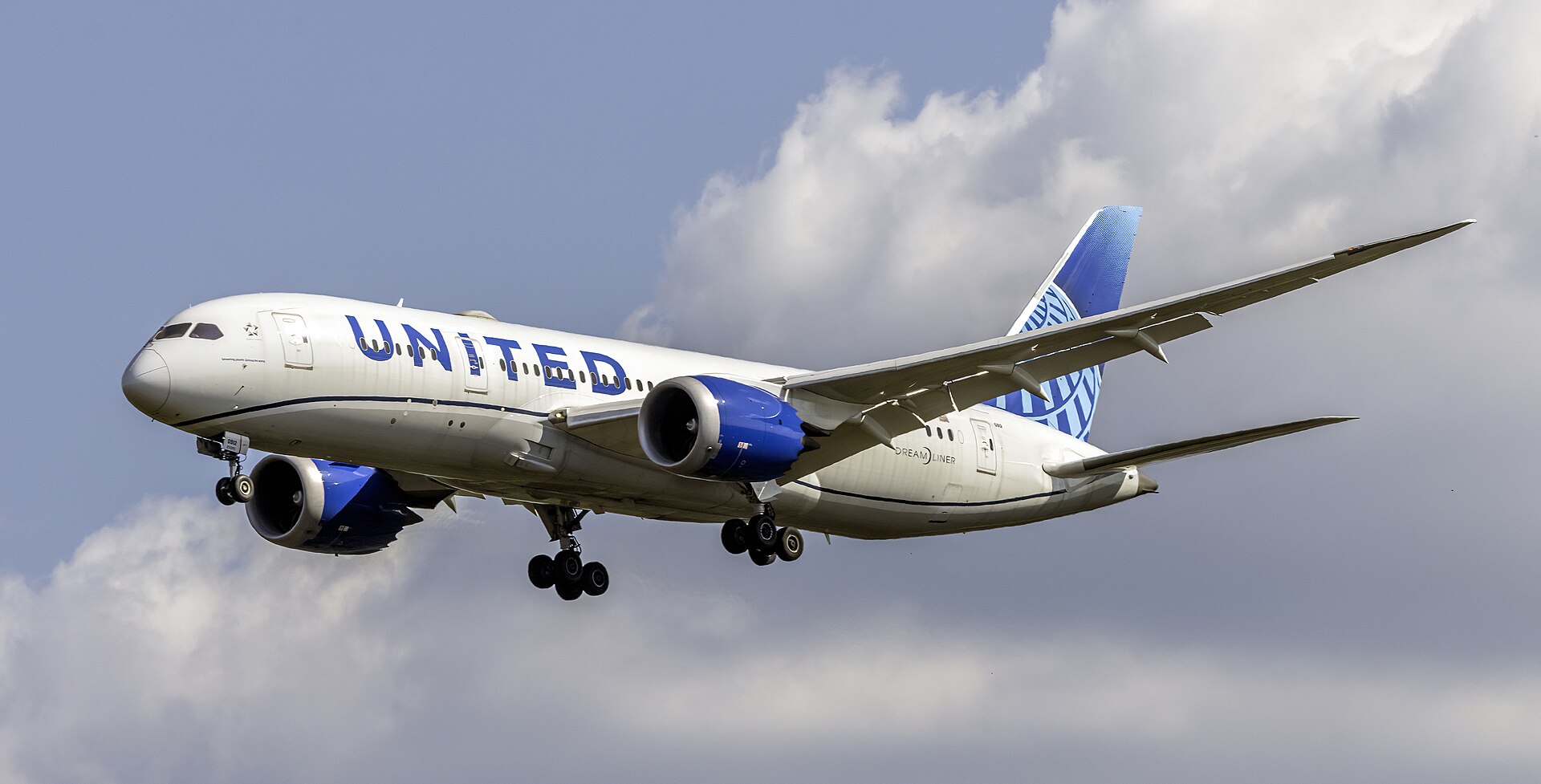
Hero photo: United Boeing 787-8 on final approach at Washington Dulles — Acroterion, CC BY-SA 4.0. Star Alliance mark: public-domain text logo; Star Alliance is a registered trademark of Star Alliance. oneworld mark: public-domain globe; SkyTeam mark: public-domain wordmark. The UNITED lockup on this page is drawn for this guide, not official United artwork. United, MileagePlus, Premier and the United globe are trademarks of United Airlines.